
‘When Tomorrow Feels Impossible’ Is a Devastating Look at the Children Japan Is Failing
Guest post

(Guest post by Akiko Tanaka, translated into English.)
I went into a recent test screening of When Tomorrow Feels Impossible knowing very little about it. I did see the trailer Rionne sent me and that was all I knew.
I did know that it was Rionne’s follow-up to The Ones Left Behind: The Plight of Single Mothers in Japan. I knew it dealt with Japan’s growing youth suicide crisis and I knew the film I was about to see wasn’t 100% finished.
What I didn’t expect was to walk out thinking I had just seen one of the most affecting documentaries about modern Japan in years.
When Tomorrow Feels Impossible begins with a question that sounds simple enough: Why are so many children in Japan finding it so difficult to live?
Rionne spends the rest of the film showing us why there is no simple answer.
The Japan presented here will be familiar to anyone who has spent enough time looking beyond the country’s international image. This is one of the safest and economically richest societies in the world, a country admired for its schools, its social order and its extraordinary sense of security.
And yet hundreds of Japanese school children are dying by suicide.
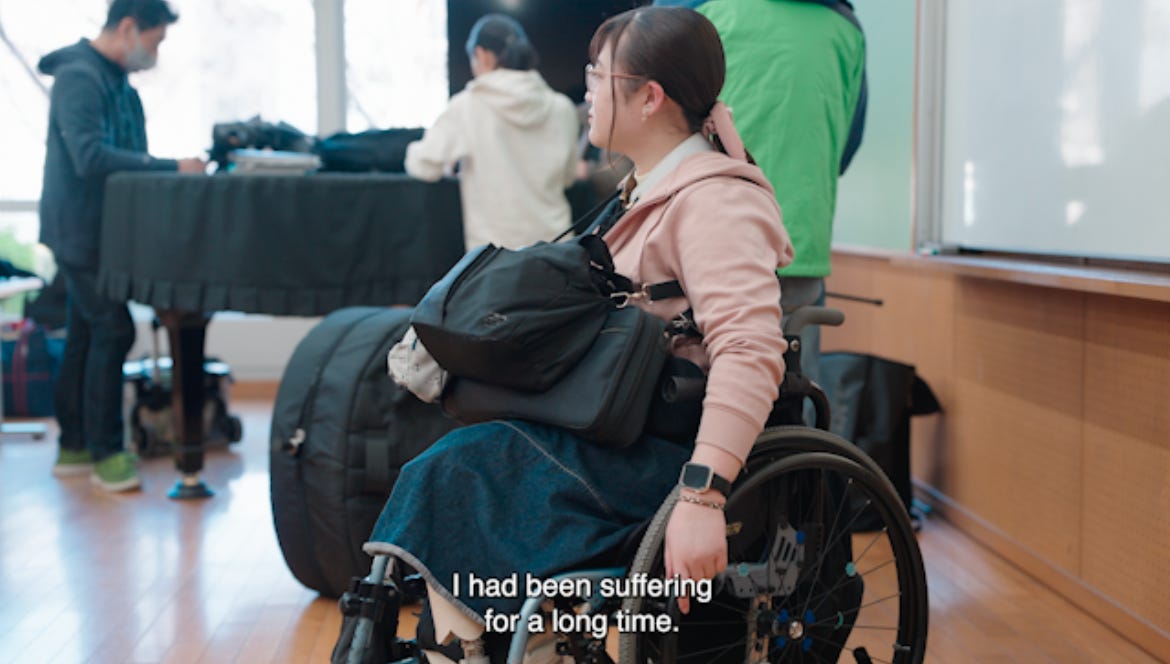
That contradiction hangs over almost every frame.
It would have been easy to make a film about bullying. In fact, for the first few minutes I assumed that was where When Tomorrow Feels Impossible was heading.
It isn’t.
Bullying is here, and some of what we hear is brutal. But Rionne keeps pulling the camera further back.
School pressure. Family breakdown. Loneliness. Social media. Mental health. Children withdrawing from school. The enormous expectations placed on young people before they are old enough to understand where those expectations came from.
Gradually, the film becomes less interested in asking what is happening to Japanese children and more interested in asking what kind of society is happening around them.
That is where the documentary becomes genuinely unsettling.
Rionne interviews academics, lawyers, politicians, suicide prevention experts, parents and people working directly with vulnerable young people. There is a considerable amount of research packed into the film, but it rarely feels like somebody reading a report to you.
Then the young people speak and those are the moments that stay with you.
There was a point during the screening when a young person described what adults failed to understand about wanting to disappear. I remember looking around the room afterward. Nobody moved!
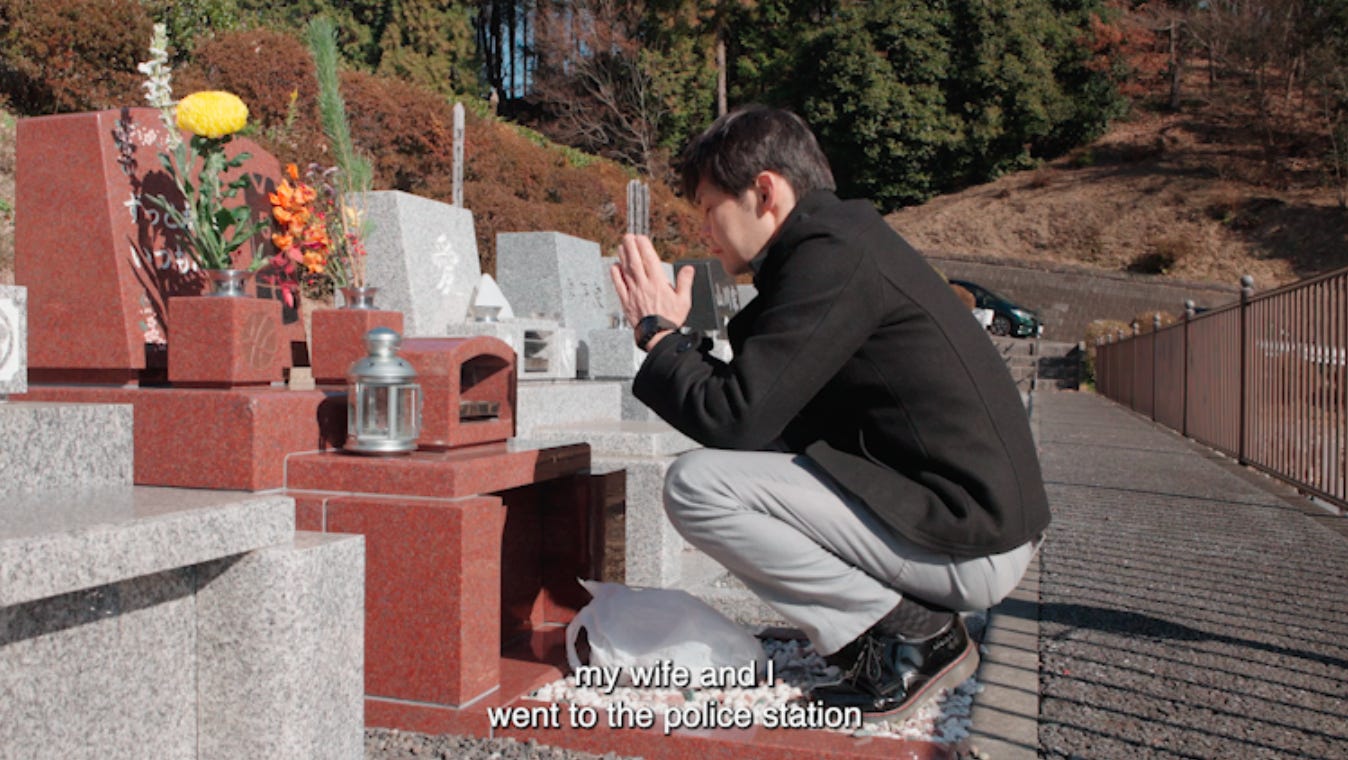
Rionne has enough confidence in the material to leave those moments alone.
There is no dramatic narration explaining how we should feel. No swelling music telling us when something is heartbreaking. Sometimes the camera simply stays there for a few seconds longer than is comfortable. It is remarkably effective.
The film also refuses the comforting idea that there must be somebody to blame.
There are bad decisions. There are institutional failures. There are adults who should have done better.
But Tomorrow Feels Impossible is after something larger.
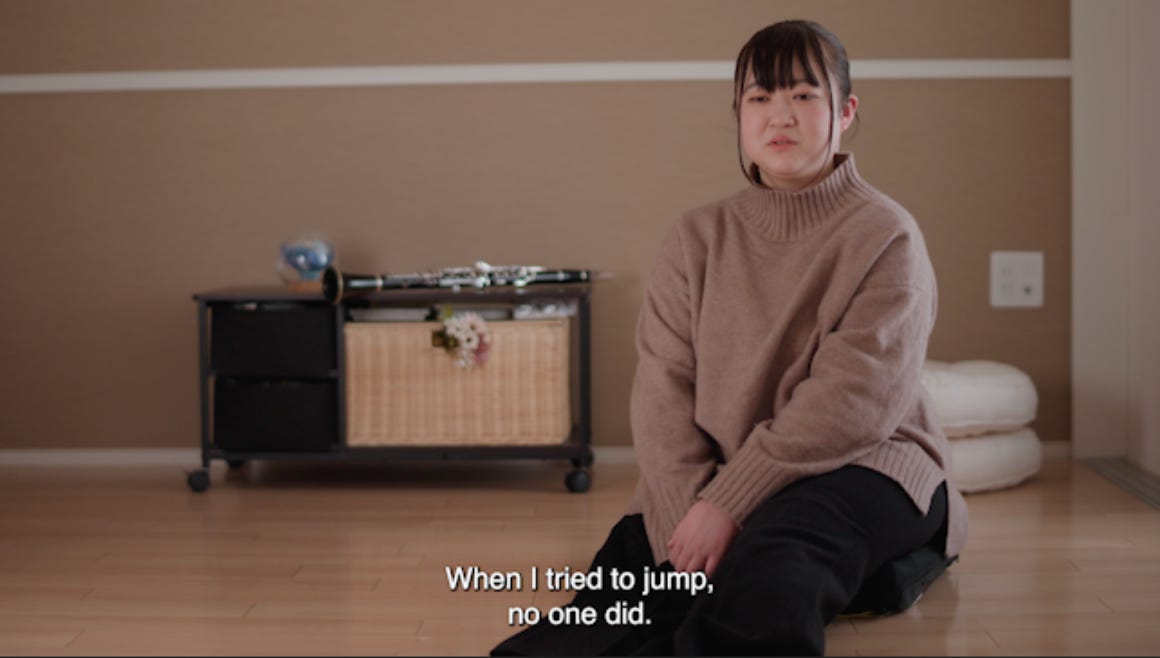
Japan has spent decades building systems around education, family, work and social conformity that have produced enormous stability and success. Rionne is interested in the children who cannot fit comfortably inside those systems.
What happens to them?
Where do they go?
And what happens when a child begins to believe that they are the problem?
There are sequences here that are difficult to shake.
Parents talking about children they could not save. Young people describing the point at which living became unbearable. Experts trying to explain why the warning signs adults look for are not always the warning signs children actually give us.
But the film’s biggest surprise is that it isn’t relentlessly bleak.
There is an enormous amount of humanity in it.
We meet people creating places where children can simply exist without being judged. We hear from young people who survived periods when they did not expect to survive. There are small moments of laughter and tenderness that arrive almost as a relief.
Rionne never turns that into an inspirational message because he is too interested in the messier truth.
Sometimes helping somebody does not mean fixing them. Sometimes it means believing them when they tell you they are struggling.
That sounds obvious but after watching this film, it doesn’t feel obvious at all.
Rionne explored similar territory in his previous documentary, The Ones Left Behind: The Plight of Single Mothers in Japan, which examined the economic and social realities facing single mothers in Japan.
The connection between the two films becomes increasingly clear.
Both are about people living inside a society celebrated for its prosperity and stability who somehow remain almost invisible within it.
But Tomorrow Feels Impossible feels like a much more ambitious film.
It is broader without losing intimacy. It is angry without becoming polemical. And it deals with an extraordinarily sensitive subject without reducing the people at its centre to victims.
Most importantly, Rionne appears to understand that the people who know the most about being a young person in crisis are young people themselves.
Adults dominate the public conversation about youth suicide.
Children live it.
That gap may be the real subject of the film.
The version I saw was unfinished. There were still sections being tightened and elements that clearly hadn’t reached their final form.
It didn’t matter.
When the film ended, nobody immediately started talking.
Eventually the lights came up.
People stayed in their seats.
That reaction told me more about Tomorrow Feels Impossible than any review probably could.
There will be statistics from this film that I forget.
There will be names of policies and government initiatives that I forget.
But there are faces and sentences from it that I suspect I will remember for a very long time.
I arrived expecting to watch a documentary about why children die by suicide but I left thinking about something much harder. How many children are telling us that life is unbearable while they are still alive? And are we actually listening?
If Tomorrow Feels Impossible reaches audiences in anything close to the form I saw, Rionne hasn’t simply made a worthy documentary about an important subject, he has made an exceptional one!
Timely. I’ll be releasing an article next week touching on this subject a little.
Great read. I’m hoping to see this documentary. This is information that needs to get out there.